

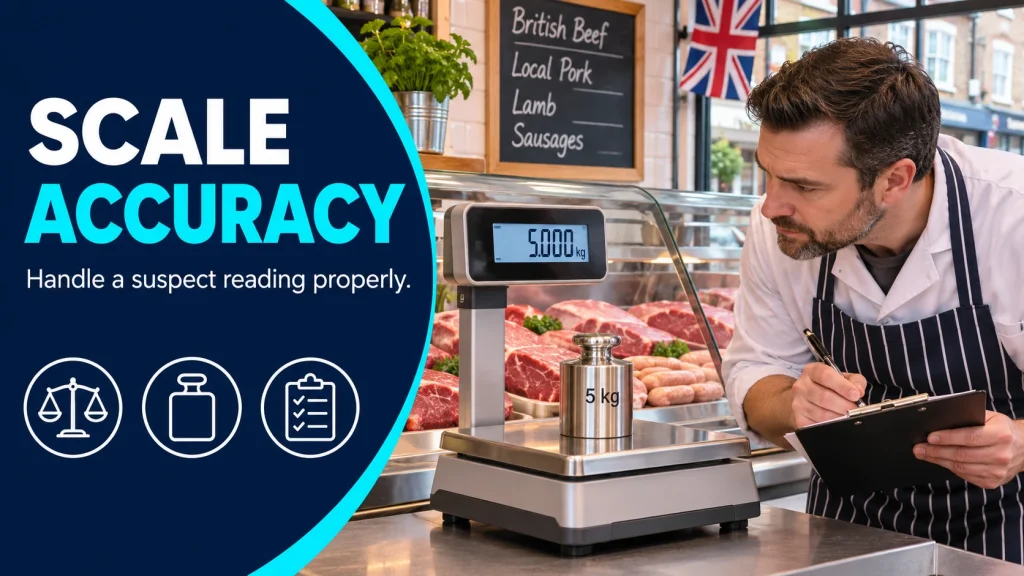
Retail scale accuracy matters to customers and to the business. A reading that looks wrong should trigger a calm, documented check, not a guess or an improvised adjustment during service. The aim is to identify whether the problem is the load, the setup or the instrument.
Pause the transaction and check the basics
Remove the item and check that the platform is clear, stable and free of packaging trapped underneath. Confirm the display returns to zero. If a tray or container is used, check how tare was applied. Repeat the reading with the item positioned properly; if it still appears wrong, use another suitable trade scale rather than charging from a doubtful result.
Our daily scale care checklist covers cleaning and routine observations. It is not a substitute for formal testing or repair.
Record the fault and protect the customer
Note the scale identifier, date, product, displayed weight and steps already taken. Keep any relevant receipt or label. If a customer was charged incorrectly, follow your refund or correction process and check whether other sales may have been affected. Do not alter a sealed instrument or change settings without appropriate authority.
Government equipment and records guidance says weighing equipment used for packaged goods must be suitable for its purpose and that domestic scales cannot be used to weigh goods intended for sale. Local Trading Standards can advise on trade measurement questions.
Arrange a proper check before reuse
A service visit can distinguish a damaged load cell, an installation problem or a display issue from an operator error. Keep the service report with the instrument record and tell staff when the scale is cleared for use. For a new site, the scale installation checklist helps plan position and setup. Contact South Coast Systems with the model and fault description.
A short escalation route protects the customer and lets the shop return to reliable weighing without unnecessary disruption.