

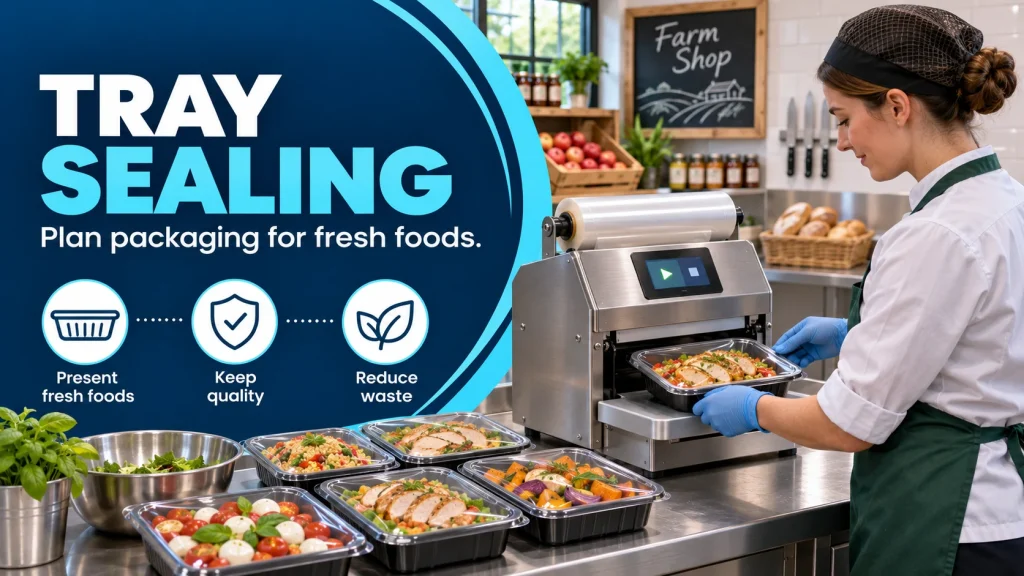
Tray sealing for farm shops can give prepared foods a consistent presentation, but the machine is only one part of a safe packing process. Before buying a sealer, decide which products will be packed, when they will be packed and what information each finished tray must carry.
Start with the products and packaging
Make a list of tray sizes, fill levels and foods you plan to sell. A chilled ready meal, a deli salad and a raw meat portion may need different handling and separation. Ask a packaging supplier to confirm that the tray and film are suitable for the intended food and use. The Food Standards Agency’s food-contact materials guidance is a useful starting point for assessing packaging responsibilities.
South Coast Systems lists several J Pack tray sealing options. Discuss the actual tray dimensions, production volume and operating method with the supplier; do not rely on a model name alone to determine fit.
Plan the packing station
Allow space for clean trays, filled products, sealed packs and rejected packs without crossing the workflow. Decide who checks seal quality and what happens when a tray fails. Staff need training on cleaning and safe operation in line with the manufacturer’s instructions. A sealer does not by itself establish a safe shelf life or replace temperature controls.
Connect sealing to labelling
Agree when labels are printed and checked. Product names, ingredients, allergens, dates and prices may vary by product and sale method. The FSA’s guidance for prepacked for direct sale foods explains the information required for products in that category. Our guide to food labelling scales and software shows how product data can fit into the process.
Test one full batch
What should the supplier demonstration include?
Bring a representative food product and the tray size you expect to use. Ask staff to fill, seal and inspect several packs at a realistic pace. Check film handling, cleaning access and how rejected packs are separated. If you expect different tray formats, change between them during the demonstration rather than assuming the changeover will be quick.
How will you review the new process?
For the first weeks, track packaging waste, rejected seals, labour time and customer feedback. Keep food safety checks separate from marketing claims about freshness or shelf life. Any shelf-life decision should be supported by the appropriate food safety assessment for the product and packing method. Review the workflow whenever ingredients, packaging or equipment settings change.
Pack, seal, label and inspect a small batch using the real products and staff who will do the work. Record the time taken, rejected packs and points where information had to be re-entered. Use the results to decide on machine capacity, packaging stock and training. Contact South Coast Systems to discuss a tray sealing setup for your product range.