
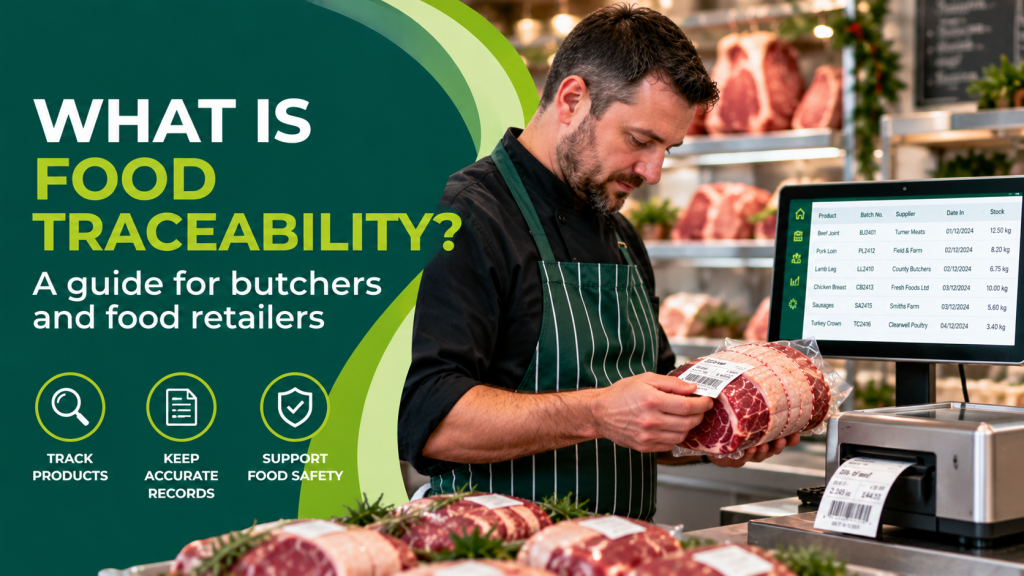
Food traceability is an important part of running a successful food business. Whether you operate a butchers shop, farm shop, food production facility or wholesale business, knowing where your products come from and where they go is essential.
However, keeping accurate records can become more complicated as your business grows. More suppliers, more products and more customer orders can all add to the paperwork.
So, what is food traceability, why does it matter, and how can the right systems help you manage it more efficiently?
What Is Food Traceability?
Food traceability is the ability to track food through the supply chain. This includes understanding where products and ingredients came from, how they have moved through your business and where they have been supplied.
For example, a butcher should have appropriate records to identify the supplier of a meat delivery. If products are supplied to another food business, relevant records should also help identify that customer.
The Food Standards Agency explains the requirements in its food traceability guidance.
Traceability is not just about keeping paperwork in order. It helps businesses identify potentially affected products if a food safety issue arises.
Why Is Traceability Important for Food Businesses?
Accurate traceability records can support several important areas of your operation.
1. Supporting Food Safety
If a product needs to be investigated, having the right information available can help you identify the relevant supplier, product and delivery.
This can support a more targeted response and help businesses establish which products may be affected.
2. Keeping Records Organised
Food businesses handle information every day, from supplier invoices and delivery notes to product details and customer orders.
When these records are spread across paper files, spreadsheets and separate systems, finding specific information can take longer than necessary.
Clear processes make it easier for staff to locate records when they need them.
3. Improving Stock Visibility
Understanding what has arrived, what has been used and what remains in stock can help businesses manage their products more effectively.
Good stock records can also help identify discrepancies, reduce unnecessary waste and support purchasing decisions.
4. Supporting Customer Confidence
Customers and business buyers expect suppliers to understand their products and maintain appropriate records.
Having organised processes helps demonstrate that your business takes product information and traceability seriously.
What Records Should Butchers and Food Retailers Keep?
The records you need will depend on your business, the products you handle and any additional requirements that apply to your sector.
As a general starting point, food businesses should be able to identify their immediate suppliers and, where required, the businesses they supply.
Relevant records may include:
- Supplier names and contact details.
- Product descriptions and quantities received.
- Delivery dates and transaction records.
- Customer business details for relevant supplies.
- Batch, lot or consignment codes where available and appropriate.
The Food Standards Agency recommends keeping records accurate and readily available. It also identifies keeping batch, lot or consignment codes as best practice.
Read the official food traceability guidance for businesses for more information about your responsibilities.
How Can Technology Help With Food Traceability?
Many businesses start with paper records or spreadsheets. These methods may work initially, but keeping everything updated can become harder as operations grow.
Suitable business software can help bring product information, stock records and order processing into a more organised workflow.
For example, Dimension Pro from South Coast Systems offers features for product management, stock control, reporting and wholesale order processing. Depending on the configuration, these tools can help businesses manage relevant information in one place and reduce duplicated data entry.
You can explore the Dimension Pro software to learn more about its features.
It is important to remember that software alone does not guarantee compliance. Your business still needs appropriate procedures, accurate records and staff who understand how to follow them.
Why Labelling and Product Information Matter
Labelling is another important part of managing food products.
Depending on the product and how it is sold, labels may need to include relevant details such as product descriptions, weights, prices, dates, ingredients and allergen information.
Accurate product records can make it easier to keep information consistent across your equipment and processes.
Dimension Pro can manage product details and recipes, including allergen information. It can also communicate with compatible Avery Berkel weighing and labelling equipment.
For businesses that regularly update prices or product details, managing information centrally may reduce the need to make the same changes in several places.
You can also explore the wider range of weighing, labelling and software solutions from South Coast Systems.
Five Practical Ways to Improve Traceability
If you want to review your current processes, start with these steps:
- Review your existing records. Check where supplier, product and delivery information is stored.
- Standardise your processes. Make sure staff know how deliveries, stock movements and relevant customer orders should be recorded.
- Keep information up to date. Review product details and correct any missing or outdated information.
- Make records easy to find. Ensure the right people can access the information they need without searching through multiple files.
- Review your systems regularly. As your business grows, check whether your current processes still meet your operational and legal requirements.
These steps can help you identify gaps and decide whether changes to your processes or software would be useful.
Make Traceability Easier to Manage
Food traceability is a key part of running a food business responsibly. Accurate records help you understand where products come from, where they go and what information is available when questions arise.
With clear procedures, organised product information and suitable technology, businesses can make everyday record keeping easier to manage.
South Coast Systems supports food retailers and wholesalers with weighing, labelling and business management solutions designed around their operations.
To find out more, visit the South Coast Systems website.