
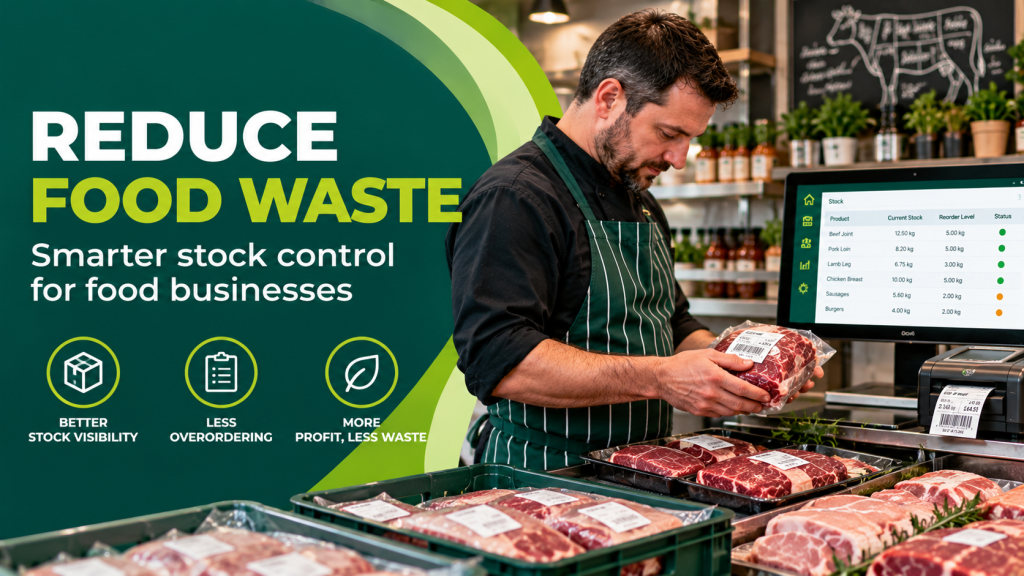
Food waste can be a costly challenge for butchers, farm shops and other food retailers. Ordering too much stock, overlooking products in storage and struggling to predict demand can all contribute to unnecessary waste.
With rising operating costs, keeping a closer eye on stock is important for protecting margins and making the most of the products you buy.
So, how can food businesses reduce waste without running short of the products customers want? The answer starts with better stock control, accurate records and a clear understanding of what your business uses.
1. Understand Where Your Food Waste Comes From
Before making changes, it helps to understand what is being wasted and why.
You might find that certain products regularly remain unsold, ingredients are ordered in quantities that are too large, or stock is overlooked until it is no longer suitable to sell.
Start by recording what gets wasted, how much there is and the reason it was discarded. Review these records regularly to identify patterns.
For example, if particular products are consistently left over at the end of the week, you may need to adjust your ordering quantities or review customer demand.
The government’s food waste guidance recommends monitoring discarded food and adjusting orders accordingly.
2. Improve Your Stock Rotation
Good stock rotation helps make sure products are used in the right order.
Without a clear process, older stock can get pushed behind newer deliveries and forgotten about. This increases the risk of products reaching their use-by dates before they can be used or sold.
Make sure deliveries are checked, stock is stored correctly and staff understand your rotation procedures.
For suitable products, a first-in, first-out approach can help keep older stock moving. However, always follow the relevant date markings, storage instructions and food safety procedures.
Regular checks also help staff spot products that need attention before they become waste.
3. Order Stock Based on Demand
Ordering the right amount of stock can be difficult, especially when demand changes throughout the year.
Seasonal events, weekends, local celebrations and changing customer habits can all affect what people buy. Ordering based on guesswork alone can leave you with too much of one product and not enough of another.
Where possible, review previous sales, current stock levels and confirmed orders before placing new supplier orders.
It is also worth comparing sales across different weeks and seasons. This can help you spot patterns and make more informed decisions about future demand.
You will not be able to predict every sale, but better information can help reduce unnecessary overordering.
4. Keep Stock Information Up to Date
Accurate stock information is essential when you are making purchasing decisions.
If your records do not reflect what is actually available, you may order products you already have or miss items that need replenishing.
Manual stock checks still have a place, but recording information in several spreadsheets or systems can make the process harder to manage.
Business management software can help bring stock records, product information and reporting together.
For example, Dimension Pro from South Coast Systems includes stock control for weighed and dry goods, reporting and purchase order features. Depending on your setup, it can help your team manage stock information and purchasing processes more efficiently.
Having clearer information available can make it easier to identify potential issues and plan ahead.
5. Use Sales Reports to Spot Patterns
Your sales history can tell you a lot about how your business operates.
Reviewing which products sell well, which are slower moving and how demand changes over time can help you make better decisions.
You may discover that certain products sell particularly well on specific days. Other items might experience a surge in demand during seasonal periods.
Use these insights to review your ordering quantities and preparation plans.
Dimension Pro offers reporting features that can help businesses review sales and stock information. The reports available will depend on the system and configuration.
Rather than relying on memory, use the information available to identify trends and adjust your approach.
6. Reduce Duplicated Admin
Stock management often involves more than counting products. Staff may need to update product records, process orders, prepare labels and keep information consistent across different systems.
When the same information has to be entered several times, it takes longer and creates more opportunities for mistakes.
Connecting compatible software and equipment can help reduce duplicated data entry. It can also make it easier to manage product information and related processes from a more centralised system.
South Coast Systems provides weighing, labelling and software solutions for food retailers and wholesalers. Explore its products and solutions to see how different parts of your operation may be supported.
7. Review Your Waste Management Procedures
Reducing waste starts with prevention, but businesses also need appropriate procedures for handling anything that cannot be used or sold.
Make sure food waste is stored safely, removed from food preparation areas promptly and disposed of correctly.
In England, food businesses must also follow the applicable rules on separating food waste. Requirements vary depending on business size and circumstances, so check the current guidance for your premises.
The government’s food waste guidance explains requirements for safe storage and disposal, including relevant rules for animal by-products.
Always prioritise food safety. Products must not be sold or used if doing so would be unsafe.
Make Stock Control Work Better for Your Business
Reducing food waste is not about having less stock at all times. It is about having the right stock, understanding what your business uses and making informed decisions about what to order.
By tracking waste, improving stock rotation, reviewing sales and keeping records accurate, food businesses can identify opportunities to reduce unnecessary losses.
Suitable software can support these processes by making stock information and reporting easier to manage.
If you are looking to improve stock control in your business, explore Dimension Pro from South Coast Systems to learn more about the tools available to support your day-to-day operations.