

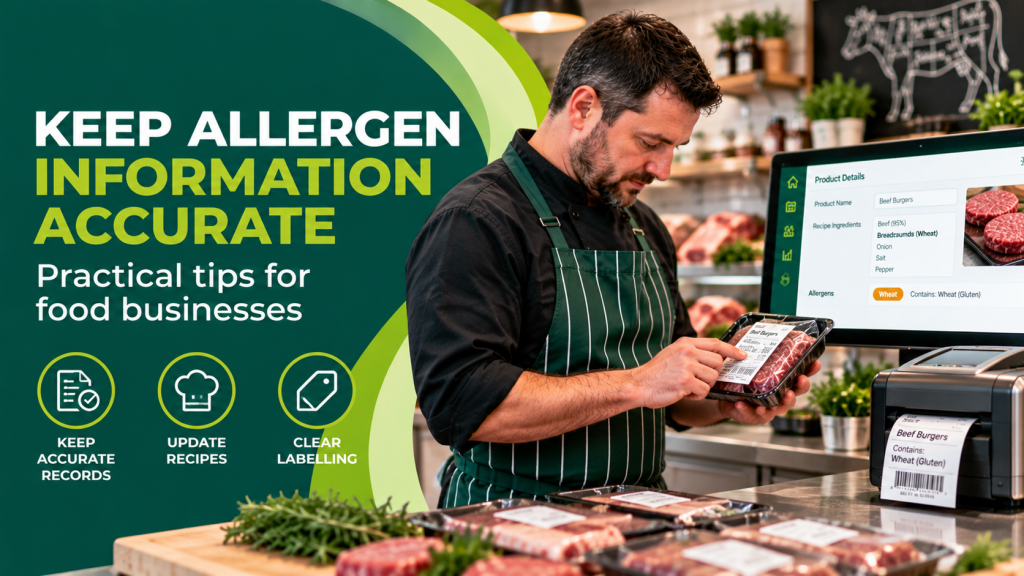
Managing allergen information is an important responsibility for butchers, farm shops, delis and other food retailers. Customers need accurate information to make informed decisions about the food they buy.
However, keeping product details up to date can become challenging when you sell a wide range of products, prepare your own recipes or change ingredients regularly.
From ingredient records to product labels, having clear processes can help your team manage allergen information more consistently.
In this guide, we look at what food businesses need to consider and how suitable software can support everyday product management.
What Is Allergen Labelling?
Allergen labelling provides information about ingredients that may cause an allergic reaction or intolerance.
UK food businesses must provide accurate allergen information for food they sell. The information required and how it must be presented depend on the type of food and how it is supplied.
The 14 regulated allergens include milk, eggs, peanuts, nuts, cereals containing gluten, fish, sesame and soya.
For a butcher, allergens may be present in products such as sausages, burgers, marinades, stuffing and ready-to-cook meals. Ingredients such as breadcrumbs, mustard, milk or soya can all affect the information you need to provide.
The Food Standards Agency’s allergen guidance explains the requirements for food businesses.
1. Keep Ingredient and Recipe Information Accurate
One of the most important steps is maintaining accurate records of the ingredients used in your products.
This is particularly relevant if you make your own burgers, sausages, pies, marinades or prepared meals.
If a supplier changes an ingredient or you adjust a recipe, the allergen information may need updating too.
Create a clear process for recording recipe changes and checking ingredient information. Make sure the relevant team members know when a change has been made.
It is also worth reviewing supplier specifications and delivery information when ingredients arrive. This helps you identify changes that could affect the information you provide to customers.
Keeping records organised makes it easier to check what goes into each product.
2. Make Sure Labels Provide the Right Information
Food labelling requirements vary depending on how products are packaged and sold.
For example, prepacked for direct sale (PPDS) food generally requires the name of the food and a full ingredients list, with allergens emphasised within that list. Other food formats have different requirements.
If your business prepares food in advance and packages it for direct sale, make sure you understand whether PPDS rules apply to your products.
The Food Standards Agency provides specific guidance on PPDS allergen labelling, including advice for butchers.
It is important to check the requirements that apply to your business rather than assuming one label format will suit every product.
3. Keep Allergen Information Consistent Across Your Business
Product information may appear in several places, including recipe records, printed labels, product specifications and online listings.
When these details are managed separately, updates can be missed. This can leave staff working from different versions of the same information.
A more organised approach can help reduce this risk.
For example, maintaining product and recipe information within a suitable business management system can make it easier to review details and update them when ingredients change.
Dimension Pro from South Coast Systems includes product maintenance and recipe management features. Its recipe builder can support the management of ingredient and allergen information.
You can learn more about Dimension Pro and how its features may fit into your business processes.
Software can support record keeping, but it does not replace the need to verify ingredients, maintain accurate information and follow appropriate food safety procedures.
4. Make Sure Your Team Knows What to Do
Even with organised records and clear labels, your team needs to understand how to handle allergen questions.
Staff should know where to find accurate information and what to do if they are unsure about a product.
They should also understand the importance of preventing cross-contamination during food preparation, storage and handling.
Avoid relying on memory or assumptions when answering customer questions. If information is unclear, staff should follow your procedures to check it before responding.
The Food Standards Agency provides an allergen checklist for food businesses to help managers and staff review their practices.
Regular training and clear procedures can help everyone understand their responsibilities.
5. Review Your Weighing and Labelling Processes
For food retailers handling a high volume of products, preparing accurate labels can involve several repetitive tasks.
Staff may need to select products, confirm prices, check product details and print labels throughout the day.
Using compatible weighing and labelling equipment alongside suitable software can help organise these processes.
South Coast Systems supplies weighing and labelling solutions for food retailers and wholesalers. Depending on the equipment and configuration, integrated systems can help keep product information consistent between software and connected devices.
This can be particularly useful for businesses managing a large product range or regularly updating prices and product details.
Explore the available weighing, labelling and software solutions to learn more.
6. Create a Routine for Checking Product Information
Allergen management should be part of your regular business processes, not something you review only when a problem arises.
Consider introducing routine checks to make sure:
- Ingredient and recipe records are current.
- Supplier information is reviewed when ingredients change.
- Labels match the relevant product information.
- Staff know where to find allergen records.
- Changes are communicated to everyone who needs to know.
- Procedures for preventing cross-contamination are followed.
The frequency of your checks will depend on your business and how often products or ingredients change.
It is also useful to document who is responsible for reviewing information. This helps ensure that updates are not overlooked when the business gets busy.
Make Product Information Easier to Manage
Accurate allergen information is essential for food businesses. It helps customers make informed choices and supports safer food handling.
By keeping ingredient records organised, reviewing recipes, checking labels and training staff, butchers and food retailers can improve how they manage product information.
Suitable software and connected equipment can also support these processes by helping businesses maintain product details and manage labelling more efficiently.
If you are reviewing your current systems, visit South Coast Systems to explore the weighing, labelling and business software solutions available for food retailers and wholesalers.